

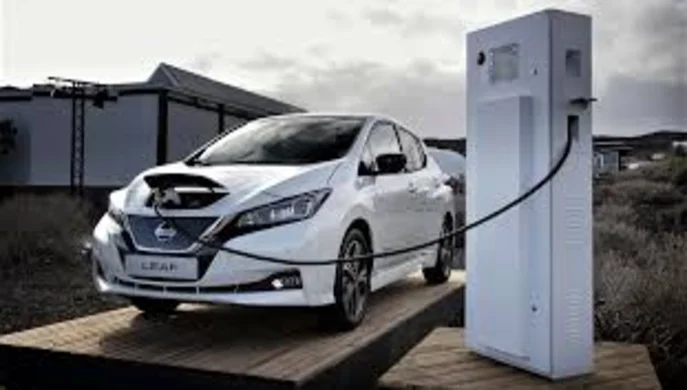
Every year, our fleet is replenished with newer models of electric cars, which in turn have sufficient battery capacity to avoid the need for daily recharging, as was the case with the variants of the early years of production. That is, the renewal of the electric car fleet leads to the fact that the factor of “tying” to a home (or garage) outlet, which was extremely necessary for models with a battery capacity of about 20 kWh, which was enough for a day or two of travel, is less and less felt.This factor previously restrained the development of the electric car segment - the number of potential buyers who have access to a connection point is limited. In contrast, the expansion of the network of public chargers, capable of relatively quickly charging electric cars with direct current, provides new opportunities for the battery-powered car segment.About 40% of models in the Ukrainian electric car fleet have batteries with a capacity of over 50 kWh, so we can safely classify them as “long-range” or at least as those suitable for interregional trips.So what about prices, and are there any savings that are talked about so much? So, if you charge an electric car exclusively at EV charging stations (electric charging stations), the savings factor does not disappear: with an average consumption of 20 kWh per 100 km of run, such a distance will cost a maximum of 360 UAH (unchanged compared to the previous month). The least expensive option for a not very large passenger car equipped with gas cylinder equipment will spend (at 12 l/100 km of propane-butane mixture) 450 UAH. And this is still a rather optimistic value, usually in practice cars with LPG require more fuel.Depending on the location, lower or higher tariffs may occur - this should be clarified in the relevant applications of the charging station operators. Also, some stations have a "standby" tariff - when the car is connected, but charging is not taking place, but we will not take this point into account. Higher tariffs are more common at roadside charging stations, especially if they are high-speed (80...100 kW and more). Lower tariffs (in some places even by a few hryvnias) mainly at charging stations located in the parking lots of various businesses - hotels, shopping centers, restaurants, etc.Compared to the previous month, prices per kilowatt-hour for different operators fluctuated, with a general trend towards growth, the amount of which ranged from 0.5 UAH to even 3.95 UAH.The average price of a kilowatt-hour received through the AC port is currently (rounded) 14.89 UAH (+1.29 UAH), through the DC port — 17.40 UAH (+0.04 UAH).
SOURCE: https://eauto.org.ua/news/761-skilki-koshtuye-zaryaditi-elektromobil-u-berezni-2025-roku