

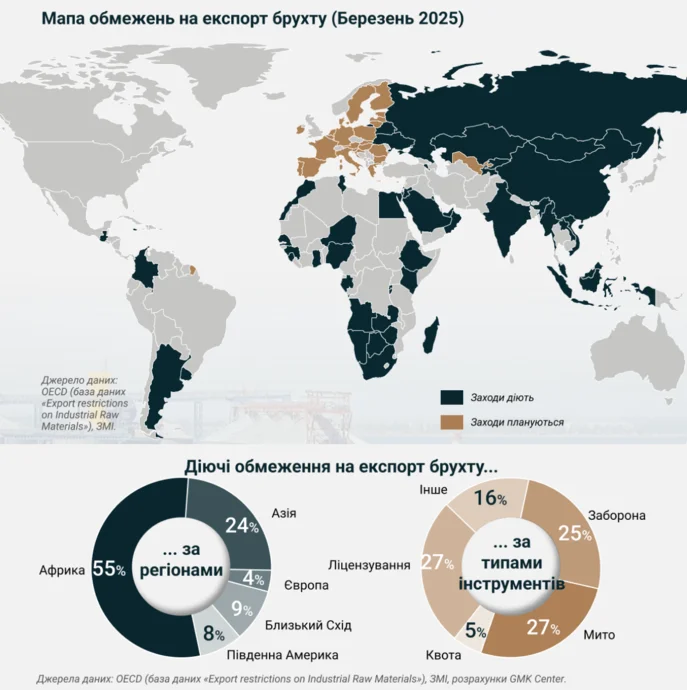
As of March 2025, 48 countries around the world have introduced 75 restrictions on scrap metal exports. The growing popularity of such measures is explained by the limited availability of scrap and high demand for it against the backdrop of active decarbonization of the metallurgical industry.According to analysts, 38% of countries that have introduced restrictions have applied a partial or complete ban on exports. At the same time, 27% of all measures are export duties, and another 27% are licensing procedures.
Export bans are a less flexible tool, but remain an important component of the policy of a number of countries.Control over the export of scrap is also being strengthened in the European Union. In March 2024, the European Council amended the Waste Shipment Regulation, which restricts the export of non-hazardous waste, including scrap metal, to non-OECD countries. In addition, in accordance with the EU Steel and Metal Action Plan, consideration is expected in the third quarter of 2025 to introduce additional export restrictions.The main reason for introducing restrictions is the need to ensure a stable supply of scrap for the domestic metallurgical industry. This is particularly important for the development of "green" metallurgy, where the availability and cost of scrap play a key role in increasing competitiveness. In addition, countries sometimes introduce restrictions in response to similar measures by other countries, seeking to ensure a level playing field.
Source: https://gmk.center/ua/infographic/48-krain-svitu-vzhe-obmezhili-eksport-metalobruhtu/