

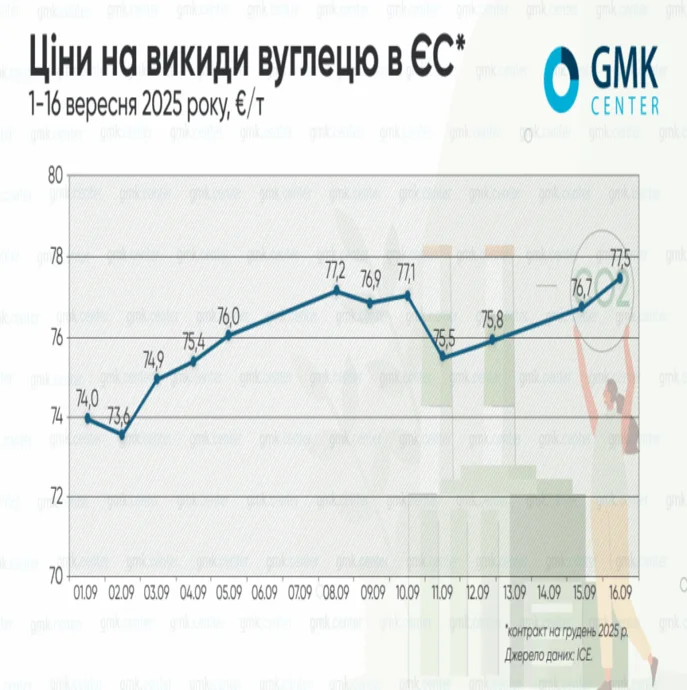
As for the CBAM, with its introduction, the volume of free allocation in the sectors covered by the mechanism will decrease, which will increase pressure on the market.In 2026, the EC plans to review the EU ETS and the Market Stability Reserve (MSR), and these issues are causing debate. In April this year, the EU executive launched a 12-week public consultation (until 8 July).As part of this, German steelmaker Thyssenkrupp has called for urgent changes to the EU’s emissions trading system to prevent the bloc’s industry from falling behind global competitors as the momentum for the green transition slows.The German group is proposing a slower and non-linear reduction in the system’s quota limit by 2050, more closely correlating it with the actual pace of industrial transformation and realistic levels of residual emissions. The company is also proposing to continue free allocation after 2040.The issue is being raised not only at the level of companies or unions, but also at the level of governments. For example, Germany is seeking to soften EU emission reduction requirements for its industries due to higher energy costs. Economy Minister Kateryna Reiche has warned of the risk of losing important sectors if the free allocation of CO2 emissions quotas is stopped. She says a solution needs to be found quickly together with the European Commission.At the same time, the Polish government is preparing a proposal to exclude the defense industry from the EU ETS, arguing that it will strengthen the security of the bloc’s member states. The Ministry of Climate and Environment has instructed the National Center for Balancing and Emissions Management (KOBiZE) to prepare an analysis of the potential impact of the initiative. The country intends to submit a corresponding legislative proposal to the EU. The government believes that it is necessary to take into account the specifics of weapons production, which depends on energy-intensive raw materials, in particular steel.
Source: https://gmk.center/ua/posts/ievropejskij-vuglecevij-rinok-gotuietsya-do-majbutnih-zmin/